Quick answer
How to choose bedside wall lights by height, switch position, shade direction, finish, and room style.
- Think about reading and reach
- Check mounting height
- Choose arm direction carefully
- Review switch position
- Match the finish with the room
- Check left and right placement
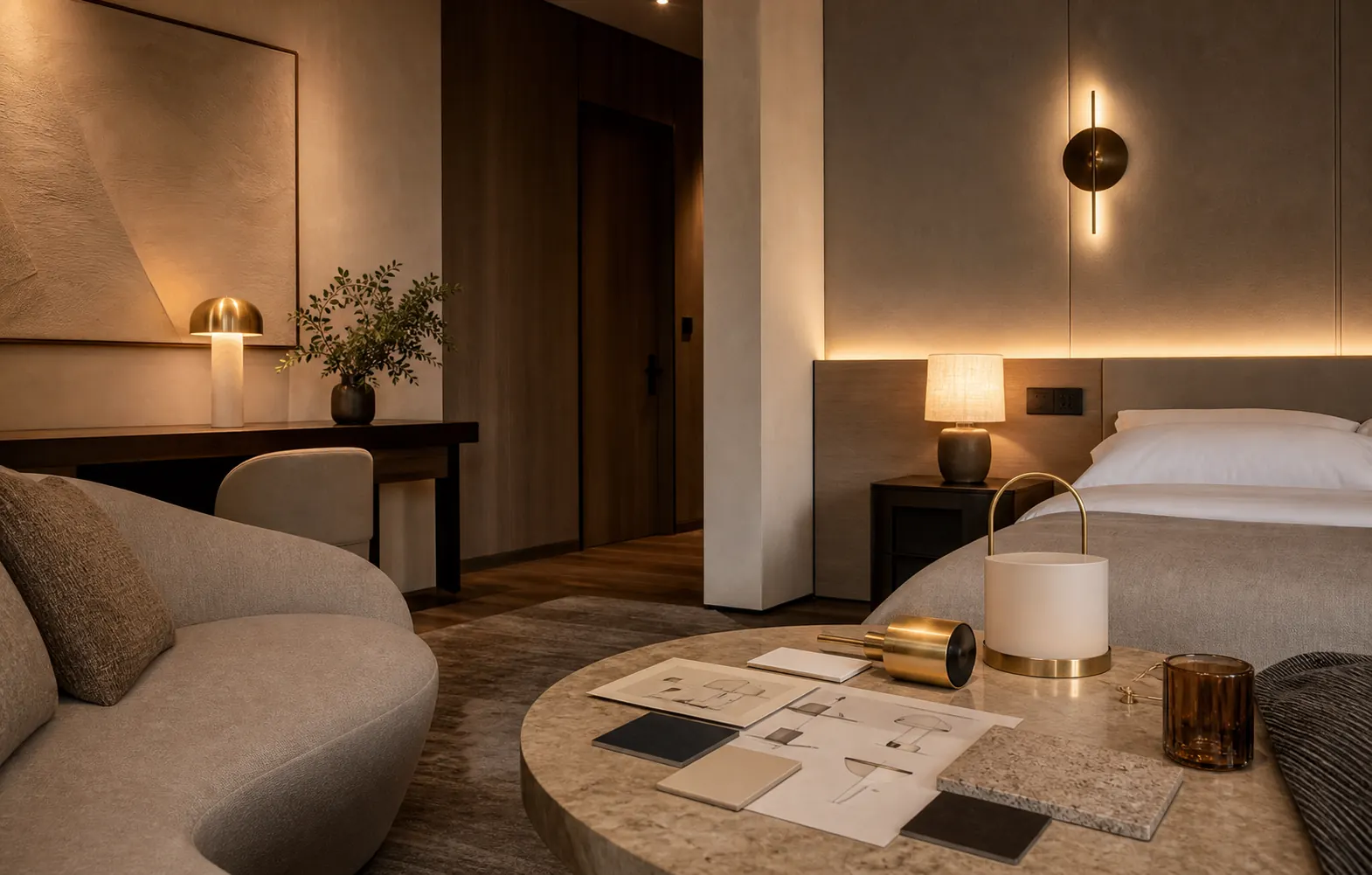
Think about reading and reach
A bedside wall light should be comfortable to use from the bed. Switch position and shade direction are often as important as style. Before choosing a product, think about whether the light is for reading, soft background light, hotel-style symmetry, or a small decorative accent.
Check mounting height
The light should sit at a height that works with the mattress, pillows, headboard, and bedside table. A light mounted too low can glare into the face. A light mounted too high may not work well for reading. Product photos should be compared with actual bed height.
Choose arm direction carefully
Fixed wall lights, swing-arm lights, and short-arm sconces behave differently. A swing arm can bring light closer for reading, but it needs enough wall space. A fixed sconce may look cleaner but should be positioned carefully before installation.
Review switch position
A bedside wall light is easier to use when the switch is reachable from the bed. Some products use an on-body switch, some need a wall switch, and some depend on wiring setup. Check product details before choosing, especially for hotel rooms or repeated bedroom layouts.
Match the finish with the room
Black, brass, chrome, fabric, and glass details should work with the headboard, bedside table, door hardware, and other lamps. The finish does not need to match every object, but it should look intentional when viewed beside nearby furniture and hardware.
Check left and right placement
If two wall lights are used beside a bed, compare mounting direction, symmetry, cord or wiring needs, and available wall space. A pair should feel balanced from the front view, but each side also needs enough practical space for use.
Think about glare and shade direction
Open bulbs, clear glass, and downward shades can create stronger direct light. Fabric, opal glass, or covered shades usually feel softer. For bedside use, comfort matters more than brightness alone, especially if the light sits close to the face.
Use room photos for scale
A bedside wall light can look larger or smaller depending on the photo angle. Room photos, side views, and close-ups help show depth, backplate size, and shade proportion. For hotel or repeated rooms, collect measurements before choosing the final style.
Next step
Choose one clear next step.
If you are still comparing styles, open the product page first. If you already know the product, finish, quantity, or room details you need, use the contact or quote path instead.