Quick answer
How warm white, neutral white, and cooler light can change the look of table lamps, pendants, wall lights, and chandeliers.
- Understand warm white
- Understand neutral white
- Be careful with cooler light
- Check the bulb with the material
- Keep one room consistent
- Use warmer bulbs with fabric shades
Understand warm white
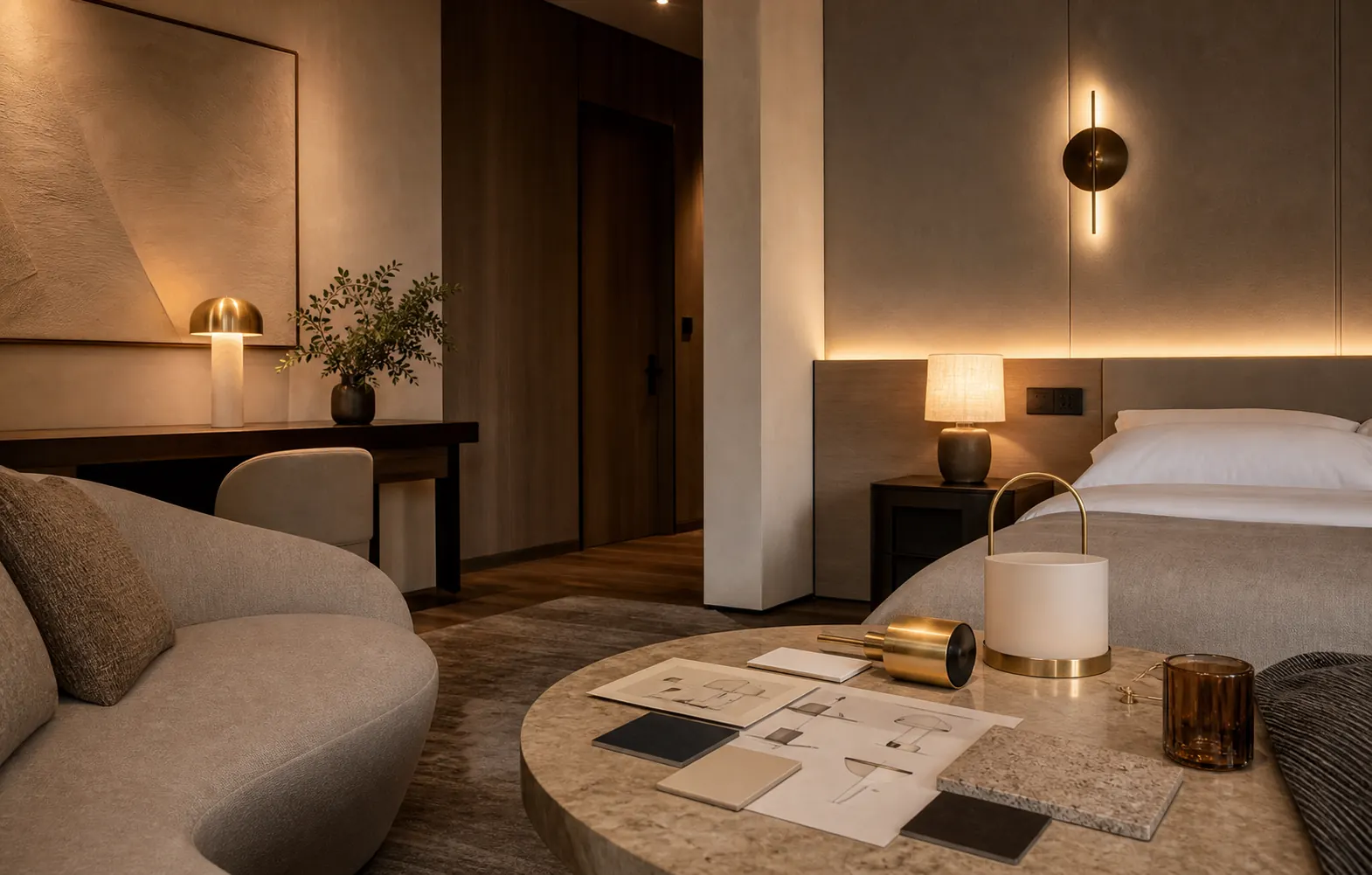
Warm white light usually feels softer and more relaxed. It often suits bedrooms, living rooms, dining rooms, brass finishes, wood tones, and fabric shades. If the goal is comfort, evening use, or a hotel-style mood, warmer light is usually the safer first direction.
Understand neutral white
Neutral white can help kitchens, work areas, mirrors, and product display areas feel cleaner without becoming too cold. It can make white walls, chrome details, and glass shades look clearer. Neutral light can be useful when colour accuracy and visibility matter more than softness.
Be careful with cooler light
Cooler light can feel bright and practical, but it may make decorative lamps feel harsher in bedrooms or living rooms. It can also change the way brass, cream fabric, wood tones, and warm ceramic finishes appear. Use cooler light only when it fits the room purpose.
Check the bulb with the material
Glass, chrome, brass, ceramic, and fabric shades can all look different when the bulb colour changes. A clear glass pendant will show the bulb more directly. A fabric shade will soften the effect. The material should be judged with the bulb, not separately.
Keep one room consistent
A room can feel confusing if nearby lamps use very different bulb colours. Table lamps, wall lights, pendants, and chandeliers in the same area usually look better when the bulb colour is consistent. This is especially important in open living and dining spaces.
Use warmer bulbs with fabric shades
Fabric shades often look better with warmer light because the shade colour becomes softer and more natural. A cool bulb inside a cream or linen shade can make the shade look dull or uneven. Check product photos and bulb notes before choosing.
Use the right bulb shape
For open glass, clear shades, and visible-bulb designs, bulb shape matters as much as colour temperature. A decorative bulb can look intentional, while the wrong bulb may distract from the fixture. For covered shades, bulb shape is less visible but brightness still matters.
Review dimming needs
If the room uses dimmers, make sure the bulb and fixture setup can support the intended use before buying. Dimming can make decorative lighting more comfortable, but product details should be checked first. Do not assume every bulb or fixture behaves the same way.
Next step
Choose one clear next step.
If you are still comparing styles, open the product page first. If you already know the product, finish, quantity, or room details you need, use the contact or quote path instead.