Quick answer
How to choose wall light mounting height for corridors, bedside areas, mirrors, living rooms, and decorative walls.
- Decide whether it is task light or accent light
- Use furniture as the first guide
- Check eye comfort
- Plan bedside wall light height
- Plan corridor wall lights
- Review mirror and vanity placement
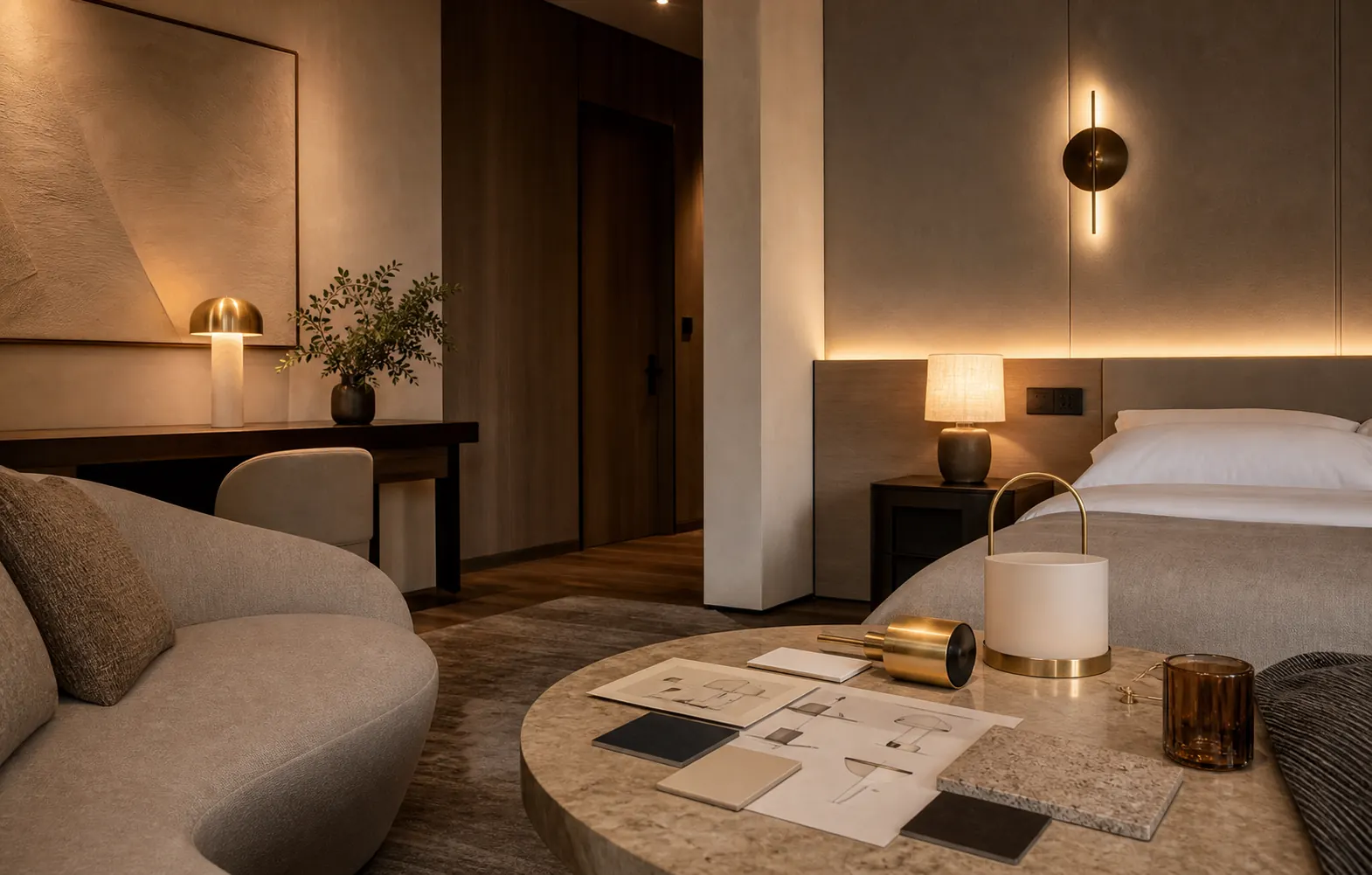
Decide whether it is task light or accent light
A reading wall light, mirror light, corridor light, and decorative wall sconce can sit at different heights. Task lighting should be placed where the light is useful. Accent lighting can be placed more for visual balance, wall rhythm, or room atmosphere.
Use furniture as the first guide
Wall sconce height should relate to the bed, sofa, console, mirror, or hallway wall around it. A light that looks correct on an empty wall may feel wrong once furniture is added. Check the wall light against the real objects nearby.
Check eye comfort
A wall light should not shine directly into the eyes when someone is sitting, lying in bed, walking through a corridor, or standing near a mirror. Shade direction, bulb visibility, and mounting height all affect glare. This matters more than a single fixed height rule.
Plan bedside wall light height
Beside a bed, the wall light should be easy to reach and useful for reading without feeling too close to the pillow. Check headboard height, bedside table height, switch position, arm direction, and whether the light is used as a pair.
Plan corridor wall lights
Corridor wall lights should feel consistent along the wall and should not stick out too far into the walking path. Spacing, backplate size, and shade depth matter. A slim light can work better in narrow corridors than a deeper decorative sconce.
Review mirror and vanity placement
Near mirrors, wall lights should help the face look evenly lit without harsh shadows. Placement depends on mirror width, face height, shade direction, and whether the light is beside or above the mirror. Product depth and glare are especially important here.
Check the backplate and wiring point
The existing wiring point can limit placement. Backplate size should cover the wiring area and still look balanced. If the wiring point is fixed, compare the backplate, arm direction, and shade height before choosing a wall light.
Use photos and room measurements together
Product photos show the look, but wall height, furniture height, and nearby objects decide whether the placement feels natural. Use front photos, side photos, and room measurements together instead of choosing only from a product image.
Next step
Choose one clear next step.
If you are still comparing styles, open the product page first. If you already know the product, finish, quantity, or room details you need, use the contact or quote path instead.