Quick answer
How to combine floor lamps, table lamps, wall lights, pendants, and chandeliers for a comfortable living room.
- Map the seating first
- Use more than one light source
- Place task light near the seat
- Choose shade direction by mood
- Watch the floor space
- Connect finishes to the room
Map the seating first
Living room lighting should follow the sofa, armchairs, coffee table, side tables, shelves, and walking paths. A lamp chosen without the furniture layout can look attractive in a photo but feel awkward in daily use.
Use more than one light source
A living room usually feels better with layered lighting: a main ceiling light or pendant, table lamps for side tables, floor lamps for corners or reading chairs, and wall lights for depth. One bright overhead light can make the room feel flat.
Place task light near the seat
If someone reads, works, or relaxes in a chair, the light should reach that seat comfortably. A floor lamp or table lamp should sit close enough to be useful without shining directly into the eyes.
Choose shade direction by mood
Fabric shades create softer light, while glass and metal can feel brighter or more focused. A living room used for evening relaxation usually needs softer light than a room used mainly for display or work.
Watch the floor space
Floor lamps, arc lamps, and tripod lamps can take more room than they appear to in a product photo. Check base size, shade depth, cord path, and whether the lamp blocks movement around the sofa or coffee table.
Connect finishes to the room
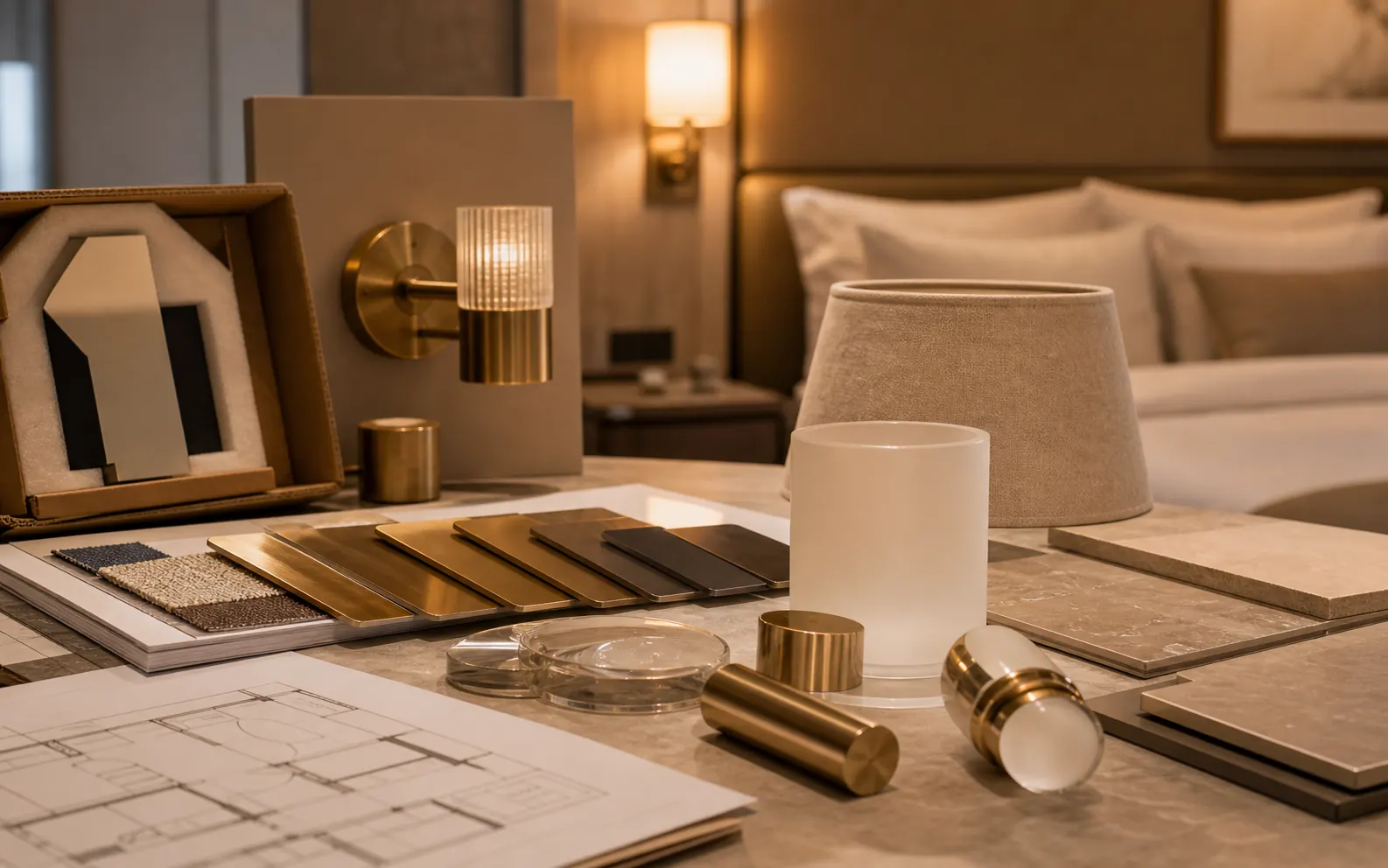
Lighting finish should relate to furniture legs, picture frames, cabinet handles, tables, and nearby decor. Brass, black, chrome, wood-tone, ceramic, and glass can mix, but they should repeat enough to feel intentional.
Use wall lights for depth
Wall lights can make a living room feel warmer by lighting a side wall, artwork area, corridor edge, or reading corner. They need mounting and wiring planning, but they can make a room feel more finished than table lamps alone.
Review daytime and nighttime photos
A living room lamp can look different when the room is bright during the day and when the lamp is the main evening light. Product photos should show material, shade texture, and lit mood where possible.
Next step
Choose one clear next step.
If you are still comparing styles, open the product page first. If you already know the product, finish, quantity, or room details you need, use the contact or quote path instead.