Turn room intent into product details.
Reference images, sketches, and room notes are most useful when they explain scale, finish, mounting, shade, material, or room use.
Designers and procurement
For interior designers, studios, and procurement teams, Aglaia helps translate room intent, finish preference, dimensions, samples, project quantities, and required changes into a clearer quote request.
Send design brief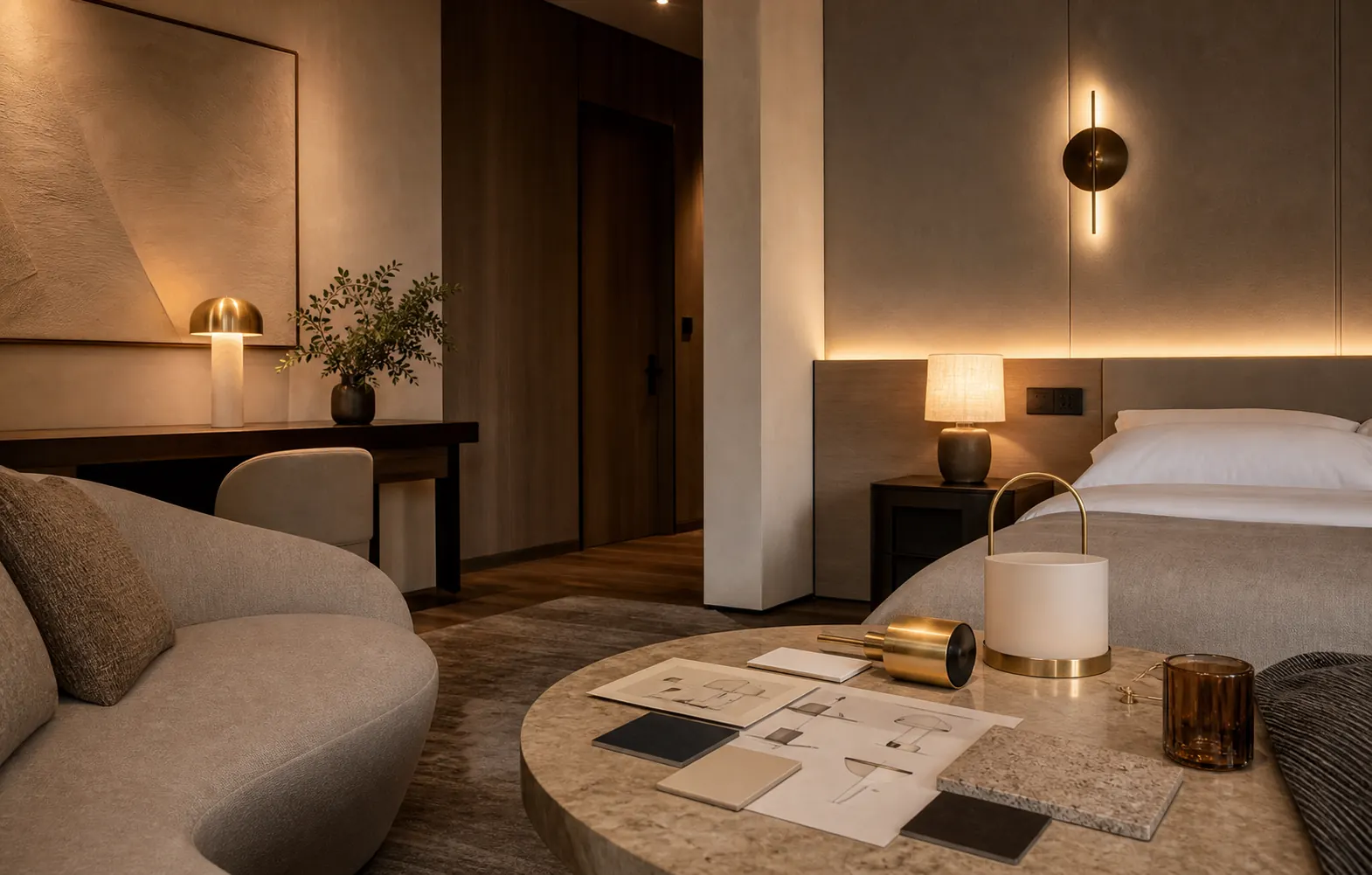
Reference images, sketches, and room notes are most useful when they explain scale, finish, mounting, shade, material, or room use.
If a reference is only a starting point, clarify the silhouette, size, finish, structure, shade, or material changes before discussing a quote.
Room schedule, sample need, target market, and project timing help decide whether sourcing, modification, or custom development is the right path.
Design brief
Design teams often begin with mood images, room references, sketches, or a preferred finish. Those inputs become easier to review when they are paired with the required changes, room use, dimensions, and quantity.
This keeps the discussion practical: choose an existing product choice when possible, discuss modified design when changes are clear, and use custom development only when the project justifies it.
What to send
These details help connect product choice to sourcing, modification, sample review, or project quote discussion.
A clear note about room use, size, finish, shade, mounting, and material is more useful than a mood image alone.
Changes to size, finish, structure, material, shade, canopy, backplate, or cable should be named before price or sample discussion.
Hotel, apartment, restaurant, and fit-out work should connect each product choice to room type, quantity, sample need, and timing.
Quote path
Product pages can help with direction, but design changes, samples, project quantities, and market details need a quote request.
Browse category, style, and finish pages to choose the closest direction before sending a design brief.
Adjusted size, finish, shade, structure, material, packaging, or tooling should be discussed before quote confirmation.
Design FAQ
Yes. Reference images can explain design intent, room use, scale, finish, material, shade, or mounting details. The request should also describe what needs to change or what must be reviewed.
Send room type, reference images or sketches, required changes, finish preference, dimensions, quantity or room count, sample needs, target market, and project timing if available.
Use the Custom / ODM path when the request involves adjusted size, finish, shade, structure, material, packaging, or custom tooling rather than choosing an existing product choice.
Next
Quote list